


6 Important company rebranding lessons to consider
We’ll answer your questions about the right ways to rebrand your business.
6 Important company rebranding lessons to consider
A company rebrand can make or break a business. Recent rebranding examples from Jaguar to Old Spice reveal a wealth of helpful information to make your company rebranding a success.
Customers vote with their wallets when unimpressed by bad rebranding examples. Yet, you can also secure success as you launch your company’s new brand identity. This is much more than a logo.
Join us as we explore three examples of company rebranding gold and three unsuccessful brand transformations this side of the millennium. As you will see, there are plenty of lessons to guide your makeover.
Bad rebranding examples to avoid
1. Don’t abandon your customer base and product
The much-criticised November 2024 Jaguar rebrand was seen as controversial from day one. The Express newspaper reported that the new image was “outraging loyal customers”. A pink and white logo that removed the iconic big cat mascot was met with confusion.
Popular Mechanics summarised Jaguar’s misfire by noting, “The approach was reportedly intended to appeal to younger generations, but it’s turned out to be one of the greatest automotive flops of recent times”. The advertisement did not show any cars. This was seen as ostracising many of their established customers who didn’t connect with abstract slogans such as “Live Vivid”.
2. Never reject your company’s heritage
The UK has a longstanding relationship with Royal Mail. Its history reaches back five centuries to the 1650s. There was widespread outcry when this postal service was repackaged as ‘Consignia’ in 2001, intending to compete internationally with distributors including DHL and FedEx.
Writing from a 2025 perspective, The i Paper cites this £2m company rebrand, including its logo redesign, as “A business school study of how not to rebrand”. The same article notes how Royal Mail’s customers resisted, struggling to remember and pronounce Consignia as easily as the original brand name.
The change to Consignia is arguably a bad rebranding example due to its short brand life (15 months) before changing back to Royal Mail. And, as the BBC highlighted in May 2002, criticism of this unpopular company rebranding was echoed by Consignia’s then-new chairman, who “pledged its demise”.

3. Your rebrand should not cause confusion
Kia, the car manufacturer, rejected its red oval logo in favour of joining up the three letters of its name in 2021. Rather than achieving the cool and modern aesthetic they were seeking, in line with its SUV competitors, there was one (major) drawback of this rebranding example.
Many consumers thought there was a new car manufacturer on the market named ‘KN’, given the presentation of its new typography. As Creative Bloq highlighted, “Although interest in ‘KN car’ spiked in 2022, the term is still consistently searched for [on Google]”. Clearly, not everyone can recognise the company rebrand.

Good rebranding lessons to embrace
4. Understand the interests of those using your products
In 2024, the Danish toy maker and entertainment giant Lego evolved its design language further beyond its cherished red brick logo. Creative Boom reveals that Lego wanted to “Strengthen what was already there and speak to the company’s youngest fans on their own terms”. They aimed to create recognisable branding that children would find fun. They did this by adopting several strategies.
Echoing the comic book method of storytelling, speech bubbles were placed beside Lego characters alongside a box panel layout when presenting visuals. Secondly, a new ‘Typewell’ font ‘inspired by the brick’ shape fans know and love, elevated their communications. You can see this font in action here.
5. Embrace your product’s defining features
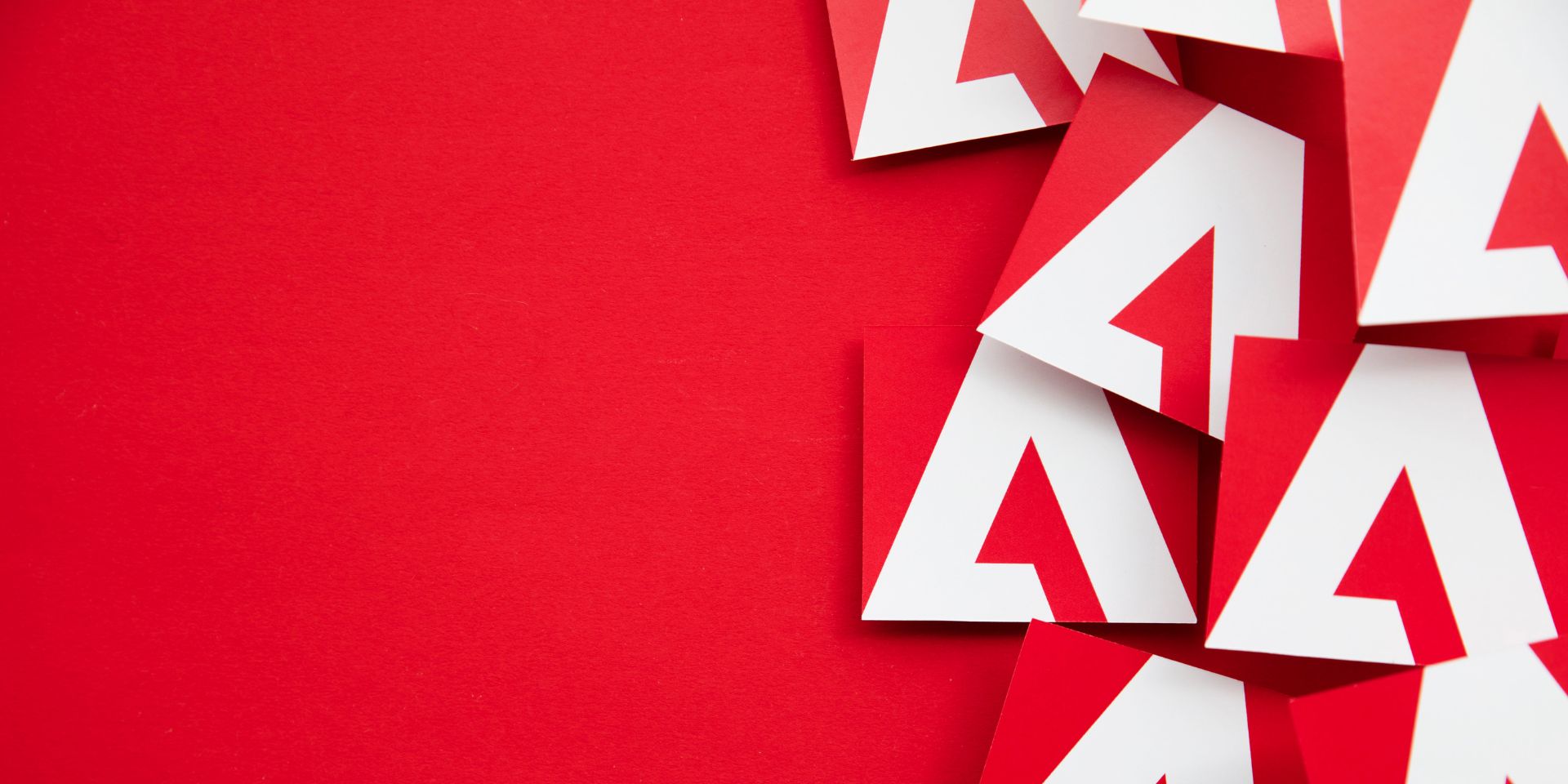
Adobe’s logo evolution has seen various versions presented to the public. In 2023, the stylised, negative space that creates an ‘A’ against a red background was used as the first letter of the brand name. Previously, it had been an additional image placed before the word ‘Adobe’.
Being red, this is the colour of action (and passion for design) as explored in our article Colour – Why Making the Right Choice Matters. The logo reflects Adobe software users designing with its technology. Adobe also draws parallels between its Experience Cloud, which aims “to streamline and simplify” and its “corporate mark”, showing how a logo’s redesign can embrace the brand’s products.

6. You can unite new and existing customers in one logo
The men’s skincare and aftershave brand Old Spice has been in business since 1937. Yet, in recent years, they have attracted a younger customer base with their tongue-in-cheek “The man your man could smell like” advertisement (debuted in 2010). As Science of Retail notes, “It made them so over-the-top that they became a parody of themselves”.
However, the savvy return of the nautical ship logo (also 2010) was instantly recognisable to older customers. This reassured consumers that the older demographic was still important. Brand Outlaw believes “That helped older customers maintain their trust in the brand” with “The sophisticated packaging letting them know Old Spice hadn’t kicked them to the curb”.
Let thefingerprint steer your company’s rebrand
Are your current logo and branded assets in need of a refresh? Let our expertise guide you through the process so you can proudly showcase your business.
Contact us here or email design@thefingerprint.co.uk to discuss your company rebranding ambitions.
If you found this helpful, then you should also read these articles: Trademarking a logo – how to and is it worth it?, What to call your company? and When businesses should let designers lead.